
Planning for “PIMBY”
For the past few months, the Planning Commission has been discussing the Housing Strategy Plan update and the four priority areas of focus. Commissioners were given a list of twelve potential priorities and decided to focus on the staff recommendations of Manufactured Home Parks, Multi-Family Tax Exemption (MFTE) / Inclusionary Zoning (IZ), Public Surplus / Faith-Based Lands, and Community Housing Outcomes Report. A potential fifth priority of a pre-approved Accessory Dwelling Unit (ADU) Catalog has been discussed in multiple meetings and, where the majority of Commissioners have expressed support for it, did not make the final cut. The Commission spent over a year discussing middle housing/ADU code updates and declined to take a simple, logical step, to help produce housing that would serve our middle-income families.
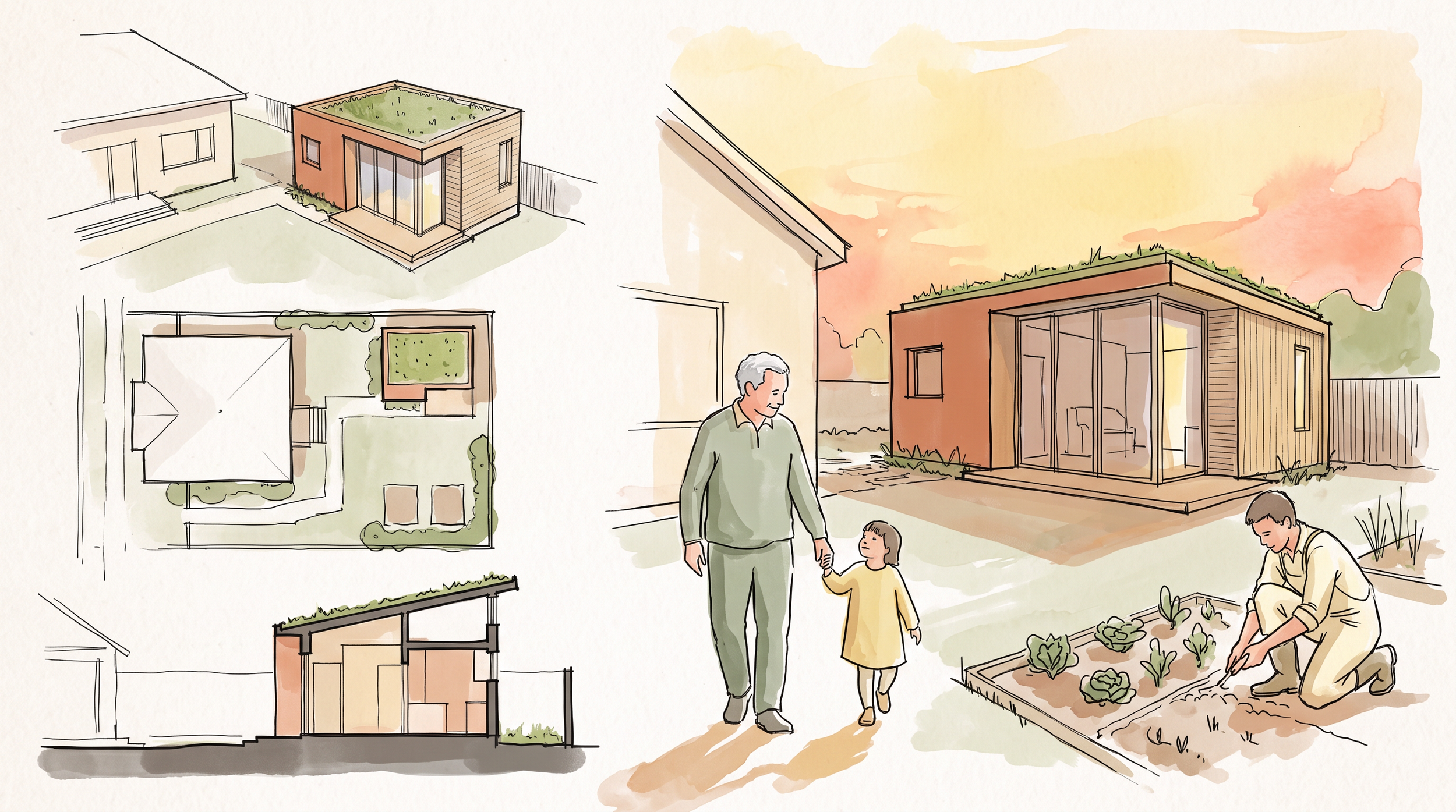
We’ve all heard of NIMBY (Not in My Backyard) and YIMBY (Yes in My Backyard) but what’s coming next for many of my generation is PIMBY – Parents in My Backyard. We’re the “Sandwich Generation,” simultaneously tasked with caring for both our children and our aging parents, each of whom need housing in an increasingly unaffordable market. Building an ADU (attached or detached) can be done at a lower cost than purchasing a new home and can be done by tapping into equity in the current home. It also puts under-utilized space to good use and maintains independence for aging parents while keeping them close to their children and grandchildren. Of course, that’s not the only use of an ADU. My parents converted their basement into a rental unit when the kids had all moved out (and they were sure we weren’t coming back), which has provided a valuable income source during their retirement.
I began in 2025 advocating that Kenmore create a pre-approved ADU catalog, and where I was an early voice, since the HSP update discussion began I have not been the lone voice. Commissioner Macias has been a consistent and strong advocate; her development experience informing her knowledge that a catalog would reduce barriers and cost to produce ADUs. Commissioner Vanderlinde emphasized that most who build ADUs are homeowners who face real design and financing barriers, and a catalog would help the Kenmore homeowners who wanted to explore this option. Commissioner Lassalle pointed out that the ADU Catalog would be consistent with PC’s work in middle housing/ADUs, and Commissioner Olson and Vice Chair Dorrian brought up some workable proposals for reducing cost and improving efficiency (allowing approved buildings to become pre-approved, and a regional partnership, respectively).
At the most recent meeting, Commissioners were asked to approve the four priorities for an upcoming meeting, and Commissioner Thompson took the opportunity to again advocate for an ADU catalog. He asked why it wasn’t higher on the list; this is something that we could do as a city that would show middle-income folks that we care about them, and their parents, and their children. As more and more homebuyers are looking for multi-generational living, and more of us are thinking about becoming PIMBYs, this comment met the moment.
Support from the Commission has not been unanimous. Chair Banaszynski has consistently expressed reservations about the pre-approved ADU Program, and in the September 1st meeting said she’d be comfortable moving it from a Phase 2 to Phase 3 priority, in favor of community land trusts. Her objection centers around her belief that the uptake is not high enough for the cost.
But, what if the cost was zero? Members of the Commission, from the dais, have suggested ways to create an ultra-low cost ADU Catalog by effectively mirroring Seattle’s ADU Catalog expansion. Kenmore doesn’t need to buy plan sets, and they don’t need to spend staff time choosing and reviewing plans to pre-approve, they just need to tag a plan that has been reviewed twice as “pre-approved” as reference for the next time it’s submitted. This is how the City of Seattle has been able to expand upon their initial ADUniverse plans by doing this exact thing. It’s easy, and free.
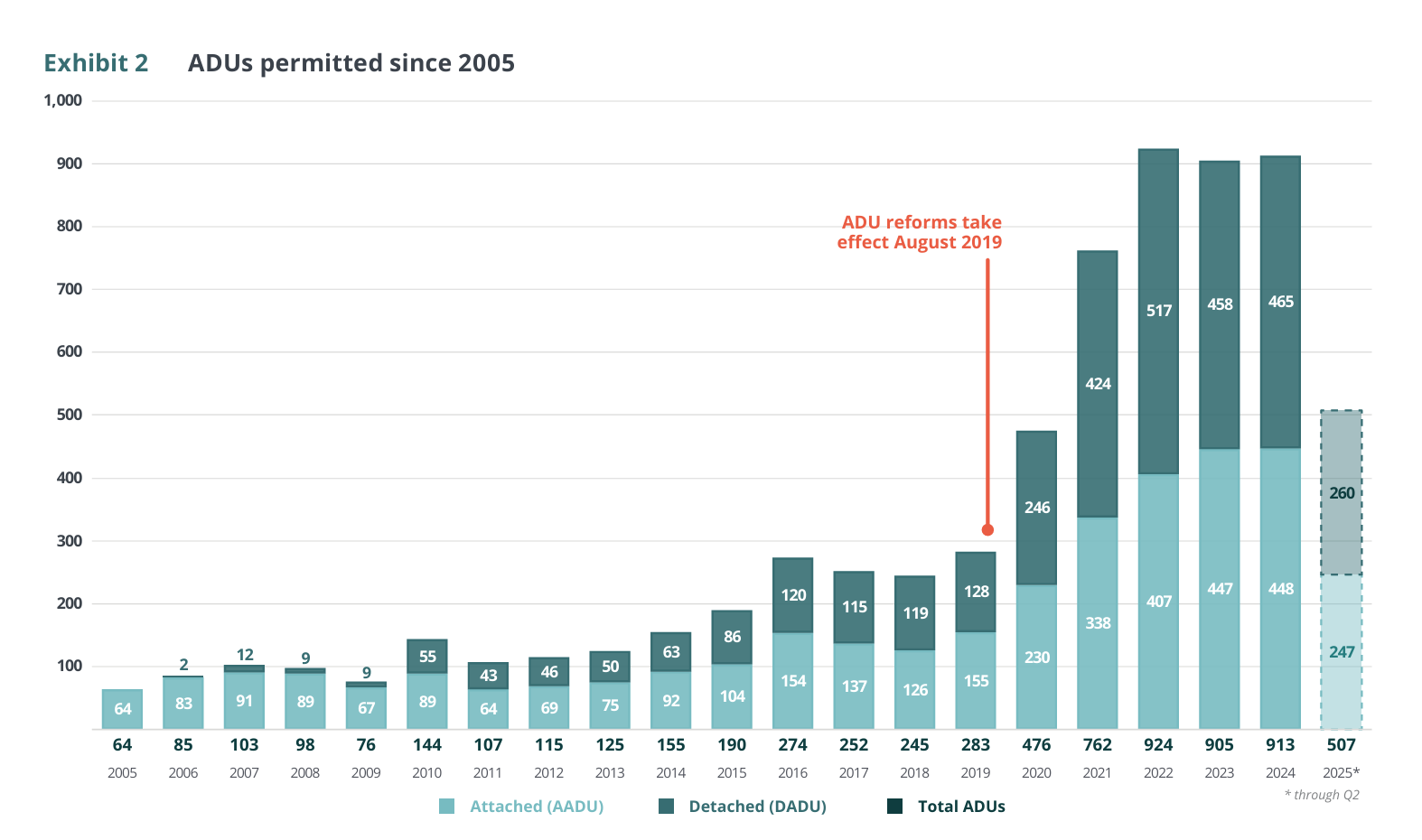
Last year, during Middle Housing / ADU discussions, I sent an email to all of City Council and Planning Commission asking that they consider creating pre-approved plans for ADUs. I outlined the City of Seattle’s initial approach, as well as how they created their “secret menu” of additional plans, and Port Angeles’ approach, which was to use grant funds to purchase eight middle-housing and ADU plans that are free to anyone in the city who wants to build them. My recommendation was to mirror Seattle’s ADU Catalog expansion and allow anything that had gone through review twice to become fast-tracked/pre-approved. In later discussions, I suggested to City Staff this be coordinated with other eGov Alliance Cities, so that they could be used across the smaller north/eastside jurisdictions. The requirements city-to-city are not dissimilar enough that cities couldn’t share their pre-approved ADU plans.
My email to the city closed with two important benefits of creating a pre-approved ADU program: easing barriers and decreasing costs to homeowners (via decreased architecture/engineering cost, but also lower purchase price for buyers of new-construction ADUs) and decreasing the cost to developers (via shortening timeline, decreasing architecture, engineering and holding costs). For the last six years, DADUs in Seattle have sold in the $550k to $1m range, with most settling around $700k. This price point is important: it’s accessible to middle-income households, where other stand-alone, new construction homes are not. If we’re serious about making sure that we have housing options that are affordable for every income, we need to start employing strategies that create housing for every income bracket, especially those who are currently underserved. Currently, our Planning Commission seems to be singularly focused on “Affordable Housing” (subsidized, income-restricted housing serving households at 80% of Area Median Income or less), with very little recognition of how expensive housing is for people who don’t qualify for assistance.
When the ADU Catalog came up again as part of the HSP, I reached out to Andrew from A Regional Coalition for Housing (ARCH) and offered to help with a pre-approved ADU Catalog. I have years of experience on the developer, investor and builder side, and also helped the City of Port Angeles expand their catalog. The response I received back was a polite “thanks but no thanks” which I could have predicted: Kenmore provides funding to ARCH through our inclusionary zoning fees (and will receive more funds if Proposition 1 passes in November), and our ADU square footage threshold is below the square footage that triggers inclusionary zoning. In other words, when we build ADUs, ARCH doesn’t get money. Their business is “Affordable” (subsidized, income-restricted) housing, not housing for middle-income households.
A few weeks ago, I hosted an open house at one of the many detached accessory dwelling units (DADUs) that have been built in Seattle using their pre-approved plans. Two thirds of the people who came through were neighbors, interested in building their own DADUs, and curious about the process and price. Of the buyers, half were interested in touring because they were interested in purchasing a home where they could also build a DADU of their own. The opportunity to walk inside the home that they would like to build shortens the gap between concept and reality - for most of us, imagining how a two-dimensional drawing would live and what changes we’d like to make is difficult, but when you can walk inside it, it gets a lot easier.
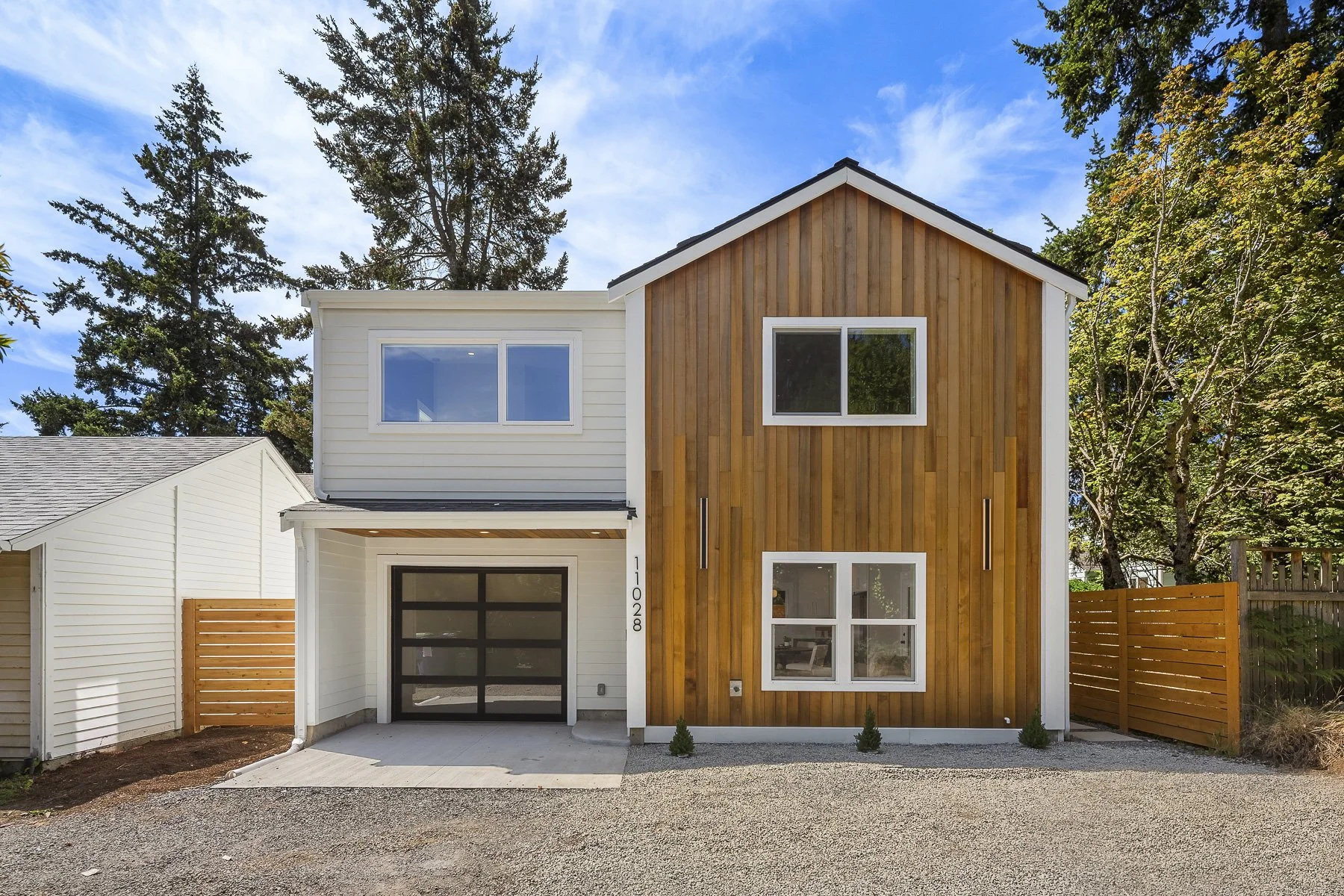
The open house I was hosting was at 11028 Evanston Ave N.; this is the “Erez” DADU, created by Yen Design in Lake Forest Park, and this is the fifth time I’ve listed this same floorplan. Aside from the tangibility of a pre-approved plan making it easier for homeowners to envision a DADU on their property, the cost savings of using a pre-approved plan are substantial. A pre-designed, pre-engineered plan saves on architectural and engineering costs, and a 60 day permit timeline (vs 160 for custom) shortens the timeline between vision and reality. This is meaningful for homeowners and infill developers who often use hard money loans at 10-12% interest.
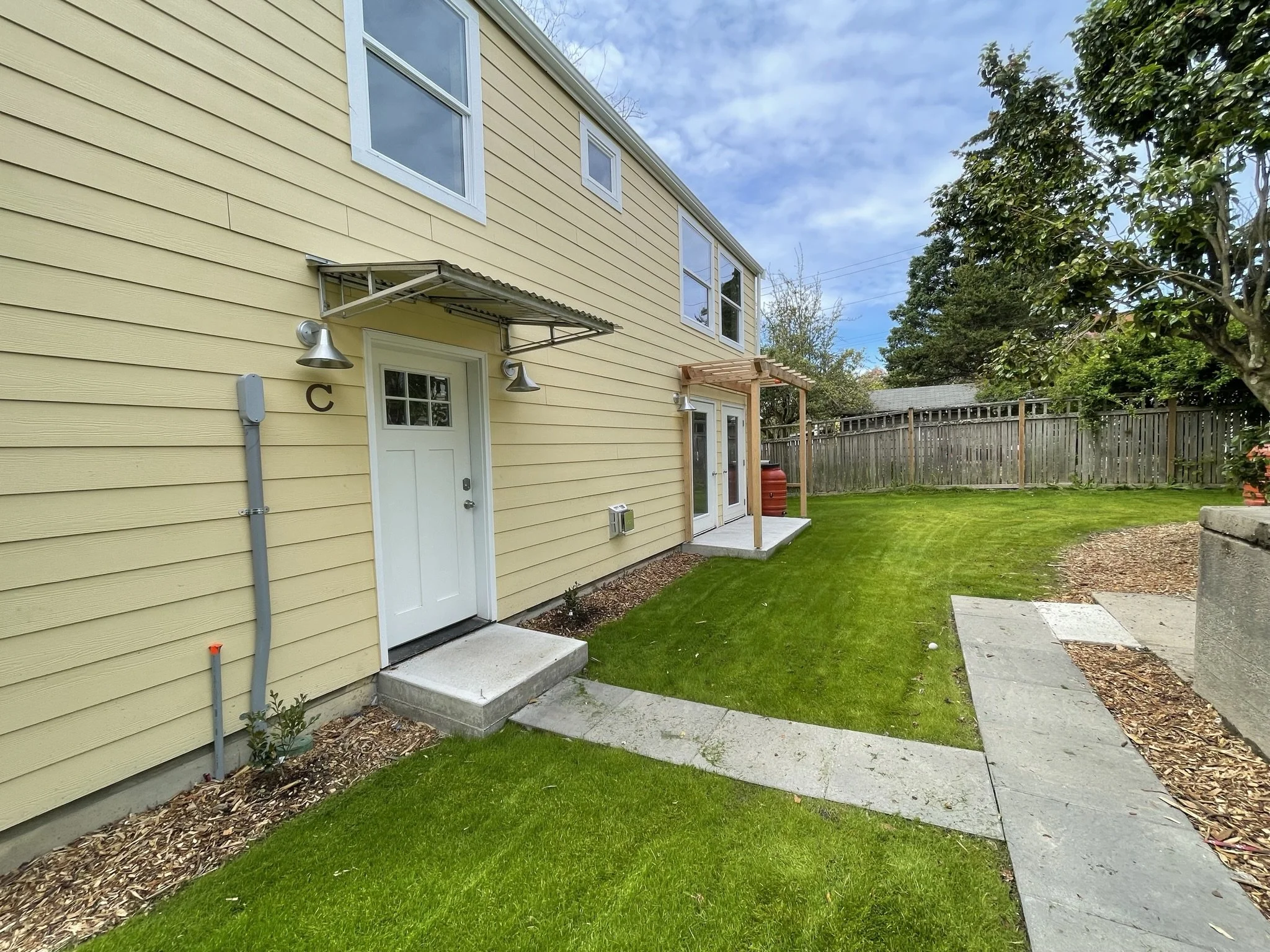
Fivedot’s Schooner Plan
When Seattle launched their initial ADUniverse site in 2020, the Schooner by Fivedot was the early favorite. I reached out to Geoff Piper at Fivedot, and he said that at last count there had been 116 permits issued for this plan by the City of Seattle. I also reached out to Alex Scofield at Yen Design, who created the Erez. Alex’s count was that they had permitted a version of the Erez 135 times. In order to create an accurate count, somewhere on the back end of the City’s system, a permit tech has to link the permit to the standard plan - if this doesn’t happen, or if there’s a variation in the plan (door gets moved from the front to the side, for example) the plan isn’t included in the count.
Chair Banszynski’s primary opposition, starting at the June 16th Planning Commission Meeting was low uptake, citing a statistic that she’d found that only 13% of ADUs built were using pre-approved plans. Building my own DADU using a pre-approved plan and working with investors and homeowners who have built pre-approved plans, 13% to me sounds like hundreds of homes that otherwise wouldn’t have been built. It also seemed like bad data – a rough estimate based on inconsistent tagging of exact duplicates of a plan on the City’s back end. Most importantly, though, this statistic lacks humanity. Those ADUs went to first-time homebuyers, single parents who otherwise couldn’t afford to stay in their children's school district – and to the teachers who taught those children. Of the 13%, how many of these were built for the neighborhood PIMBYs, who would have been lost without a pre-approved plan as a starting point?
During the September 1 meeting, Commissioner Vanderlinde commented that market forces won’t address deeply affordable housing, and he’s right. “Affordable” income-restricted housing has to be subsidized – the cost to build is too high, and the rent or resale too low, for the market to build it without assistance. Market forces, however, can and will address middle-income housing (80-120% of Area Median Income), of which Kenmore also has a deficit. Establishing a method for creating an expandable ADU Catalog, especially in partnership with other jurisdictions, was our best shot at creating new housing units that fit the needs of our middle-income residents. Frankly, compared to the four priorities chosen by the Commission, it stands the best chance of creating new housing units at all.
The Housing Strategy Plan will be coming forward for public hearing in October before it is finalized and sent to Council. During the public hearing, Commissioners are asking for feedback on these priorities as they work to finalize the Housing Strategy Plan priorities.
